

To Rebuild Trust in Government, Start Local and Fix the Fundamentals
When I tell people I work on government reform, they usually picture me speaking to lawmakers on Capitol Hill, filing lawsuits in courtrooms, or even writing policy proposals on political campaigns. And while I’ve spent time doing all of these things – and believe they are vital to healthy democracy – it’s often the seemingly simpler things, like timely trash pickup and straightforward application forms, that have the most tangible impact on people’s lives.
The truth is that government succeeds or fails in communities, where the most meaningful reforms start local and fix the fundamentals. This work is often unglamorous, but it’s where people interact most deeply with their public institutions: 9-1-1 call response times, or water, road, and housing services.
When the fundamentals are broken, communities become disaffected. Over time, this contributes to widespread distrust and ultimately undermines American democracy.
Government’s promise and potential to help people, especially those most vulnerable, is what drew me into public service – and why my colleagues and I built Partners for Public Good (PPG). We believe the most urgent work in America is in fixing the fundamentals of how public systems operate.
Every day, there seem to be more and more conversations about state capacity, and how to build a government that can meet 21st century challenges. At PPG, we see our work as the bridge between policy visions for what government should deliver, and what it takes to implement them on the ground.
No matter the policy goal, be it more housing, faster services, or cleaner streets, success or failure hinges on the same set of core operational levers. Governments rely on procurement, hiring, budgeting, and technology to power most everything they do.
That is why we partner with public leaders to focus on fixing those fundamentals. Sometimes this involves simple changes and capacity-building; other times, a reimagining from the ground up. And then we scale what works, spurring innovation and spreading best practices to governments all across the country.
When I was General Counsel to the San Francisco Fire Department, I saw just how much the city’s ability to deliver for residents depended on fast, fair, and competent service. Fire code enforcement was an area that had become rife – safety issues in buildings, vulnerable families exposed to hazards, and landlords behaving unfairly. Enforcing the code too aggressively risked displacing the very people we needed to protect. Enforcing it too weakly meant leaving them in danger.
We organized officials, housing providers, and human-services leaders, coordinating a response that made buildings safer without displacing residents. We did this by clarifying enforcement protocols and using state relocation benefits provisions to ensure families received support. Ultimately, we saw opportunity – what started as a code enforcement problem became a blueprint for housing fairness that translated policy into strong implementation.
That experience crystallized something for me – that real reforms happen where policy design meets implementation – and good ideas need operationalization underneath them to make impact for the people those policies are intended to serve. And in turn, the on-the-ground insights from implementation should loop back into how we design policy in the first instance.
At PPG, we’re building that infrastructure through a technical assistance, test-and-spread model that does much more than teach problem solving or provide consulting services. It’s developing a relatable way to innovate, measure, and learn from what works. Every engagement becomes a live experiment in how government can field-test to deliver faster and better for communities. We invest not only in technical fixes, but in building the capacity and toolkits of the public servants that are the backbone of government. And the insights we collect inform the data and research that, over time, help inform smarter policy and stronger state capacity at a systems level.
Our theory of change is based on three principles:
- Government performance, especially at the local level, is inseparable from how people experience a thriving democracy
- Performance isn’t simply a technical issue that needs patching here and there – it’s a public good that requires investment
- That investment requires public trust, which is only earned through solid and reliable service, every single day
My deep conviction is that government can and should be a force that helps each boat rise.
That’s where PPG comes in, and we are thrilled to take on this work. It’s rarely easy, but it is essential. If we want a society – a future – where people are bought in on democracy, we need to start by making sure government earns that investment.
Reach out to learn more or get involved. It’s going to take all of us.
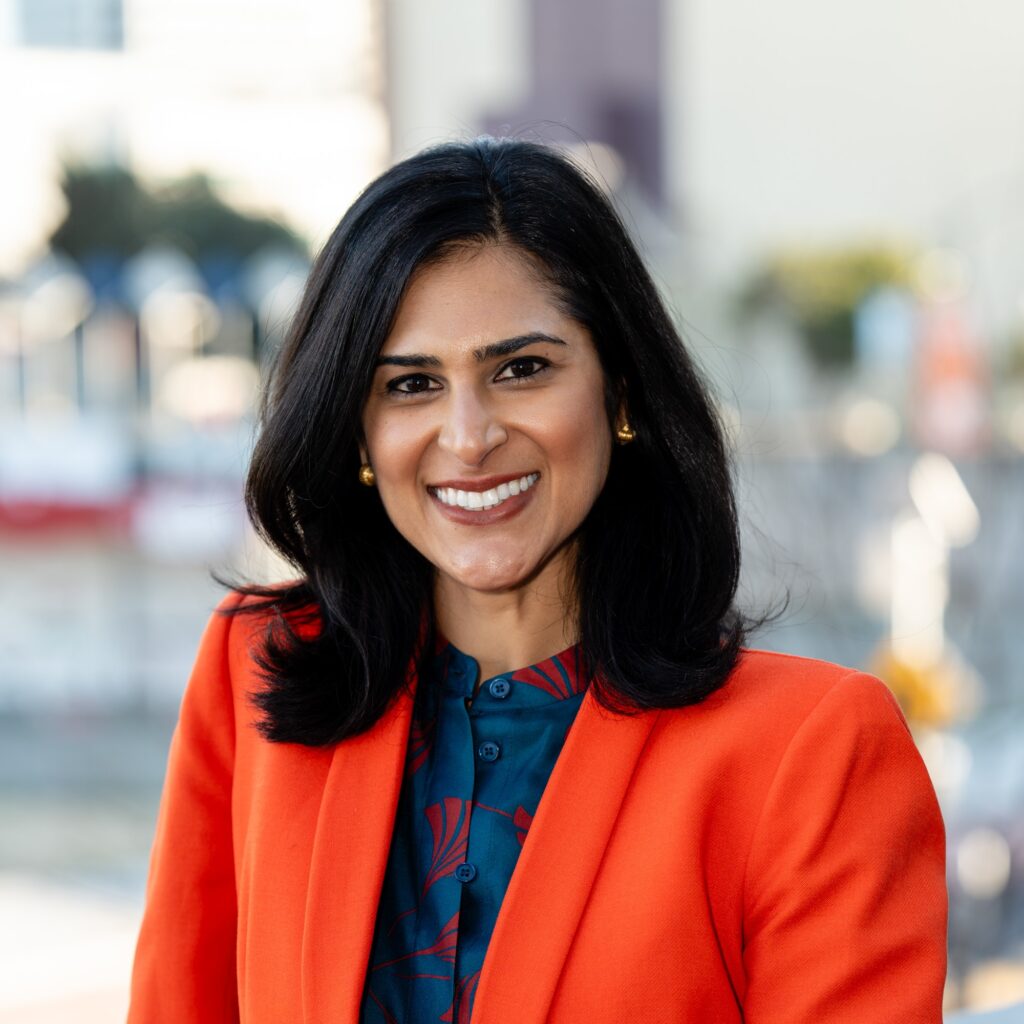
Neha Gupta is the Chief Operating Officer and General Counsel at Partners for Public Good, where she leads strategy and impact, operations, and public affairs for our fast-growing organization. A former local government lawyer and White House advisor, she’s spent her career helping public institutions work better for the people they serve.