
Inside the Collaborative Helping Local Governments Rethink How They Buy Food
A family in New York City wakes up at a public shelter and hustles downstairs in pajamas for breakfast together. As the parents line up in the cafeteria, holding onto their bleary-eyed kids, how this food came to be served to them is far from their minds. But whether it’s something nutritious, like fluffy eggs or fresh fruit, or something they wish they didn’t have to feed their family, is very much on their minds.
This moment plays out for millions of Americans every day in public institutions ranging from hospitals to senior centers to correctional facilities to public schools. Government employees, bound by procurement policies, are in charge of deciding what goes on the plate. For years, the quality of these meals has been on a decline as incentives have driven governments to buy cheaper, more processed foods and move away from local, fresh, scratch-cooked meals.
But all of that is changing—and we’re so excited to be a part of a movement supporting access to quality food for Americans in new ways.
Turning Food Procurement Policy Into Practice
Increasingly, local governments are leveraging the opportunity to align their institutional food purchases with other policy goals, such as investing in local businesses, increasing environmental sustainability, supporting residents’ health, and providing quality services. To solidify their commitment, many governments have adopted values-based food procurement policies that specify that the food they purchase for public institutions should support their governments’ values.
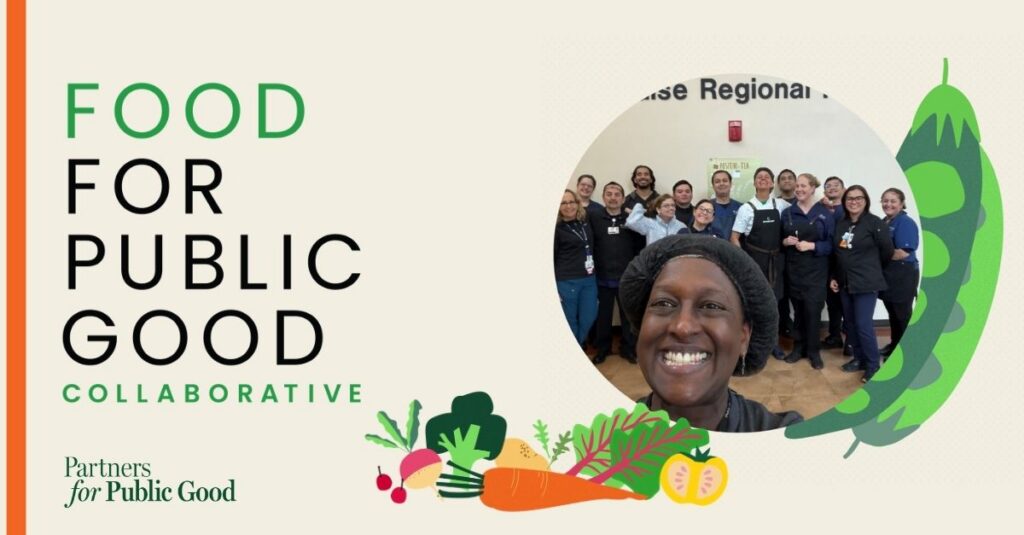
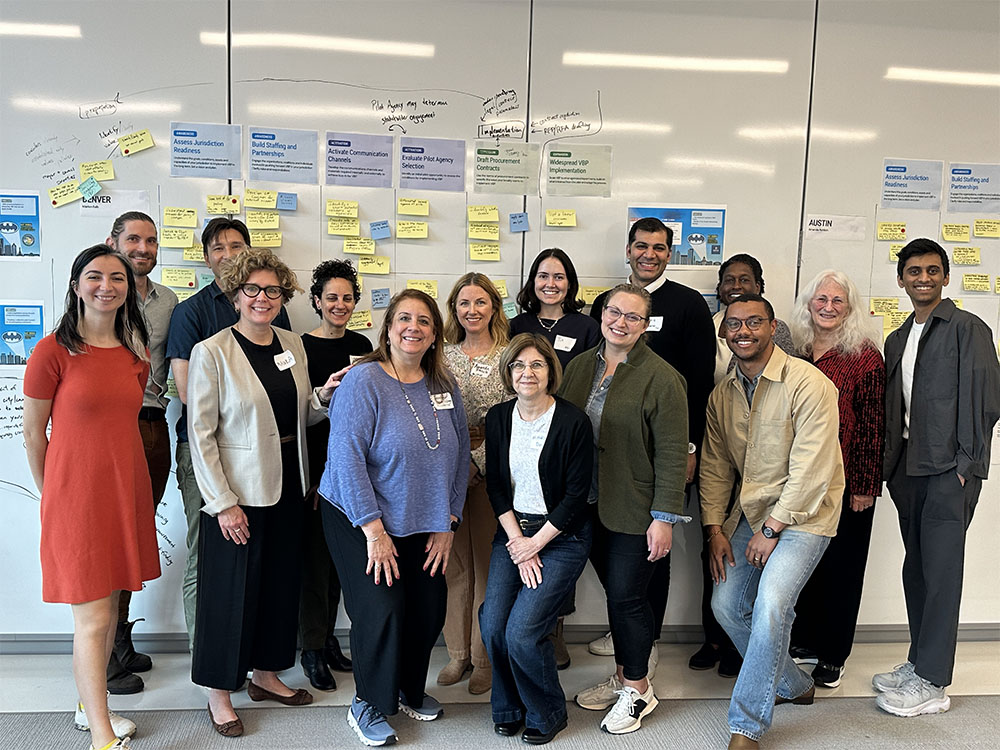
To support local leaders who are implementing values-based food procurement policies, Partners for Public Good is now proudly facilitating the Food for Public Good Collaborative. Collaborative members are staff who lead good food work in a dozen cities and counties and are based in a mayor’s office, public health, sustainability, or planning departments. Through virtual biweekly meetings, members learn from external experts, share best practices, and problem-solve. In addition, individual technical assistance helps address the unique needs of each jurisdiction. The Collaborative also meets for an annual in-person convening.
“I can see by listening to others that (a) I am not the only one going through this challenge—this work has commonalities around implementation challenges; and (b) I am inspired by some of the solutions they have implemented for said challenges.”
~ Karen Roth, Public Health Nutritionist, Santa Clara County Public Health Department, Santa Clara County, Calif.
The Collaborative was previously incubated at the Food Systems Action Lab at the Institute of Design at Illinois Tech. This work is made possible with support from the Rockefeller Foundation and Builders Vision.
Part of a Larger Public Food Purchasing Movement
Many institutions and governments, including many members of the Collaborative, have adopted values-based food procurement policies inspired by the Center for Good Food Purchasing. A pioneer in the field, the non-profit organization created the Good Food Purchasing Program which provides a policy and evaluation framework that encourages institutions to direct their buying power toward five core values: local and community-based economies, environmental sustainability, a valued workforce, animal welfare, and community health and nutrition, guided by the principles of equity, accountability, and transparency.
PPG complements the Center’s work on purchasing evaluation and good food purchasing practices by providing values-agnostic support to local leaders who are coordinating the implementation of values-based procurement policies.
PPG also collaborates with other organizations that support government leaders advancing food policies and better food procurement practices, including C40 and the Natural Resources Defense Council.
Success Stories So Far
Cities and counties who are members of the Collaborative have seen meaningful changes in the quality of the food they buy as they have implemented values-based food procurement policies.
Boston Public Schools shifted towards more scratch-cooked, whole-food meals and now serves a plant-based main dish at every meal, with 18.3% of food spending going to local products in 2023-24, according to evaluations conducted by the Center for Good Food Purchasing.
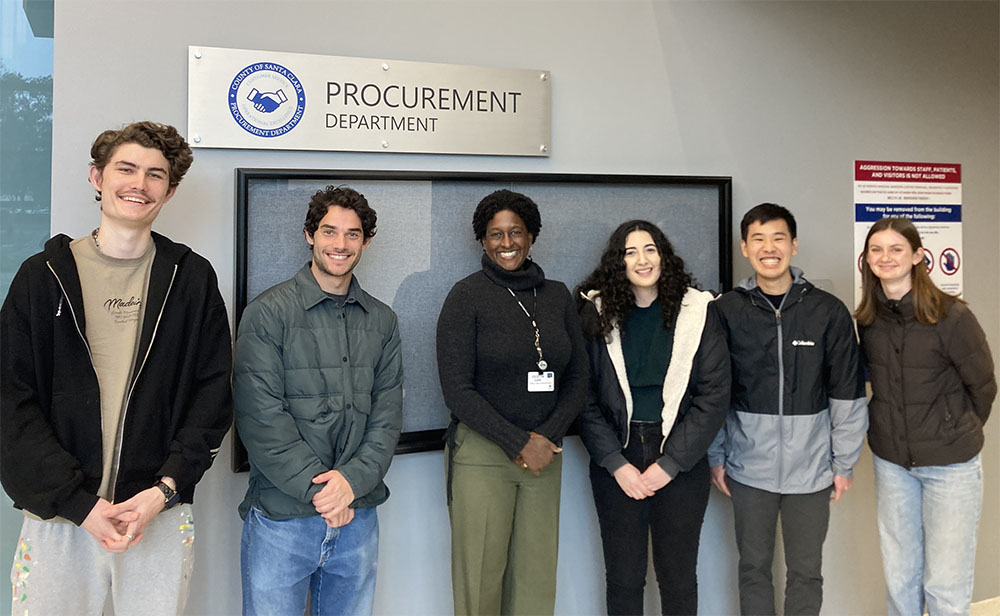
The County of Santa Clara cut food costs by $640,000 and its food-related carbon footprint by nearly 40% at one county hospital between 2022 and 2025 by shifting to local, antibiotic-free chicken and house-made bean dishes. And New York City agencies spent over $200 million with New York State producers and food businesses in 2025, including a more than thirteen-fold increase in purchases from minority- and women-owned businesses since 2019.
How PPG is Supporting the Collaborative’s Members
Drawing on work with hundreds of local governments, Partners for Public Good is sharing its expertise in the following approaches with Collaborative members: mapping the full procurement process to find where it can be streamlined, building strong collaboration across the agencies involved in food purchasing, writing RFPs friendly to small and local bidders, managing vendor relationships after contracts are signed, and evaluating and sharing results to build support for the work.
“It is hard to overstate the value of this group for me. This is my first position where policy interaction is central to my work, so this group has been central to developing my understanding of how this work is done.”
~ Sean Shatto, Chicago Good Food Purchasing Implementation Manager, Chicago Food Policy Action Council, Chicago, Ill.
Join Us and Learn More
If you work in a city or county government and are involved in food purchasing decisions or values-based procurement, we’d like to hear from you. Reach out to inquiries@partnersforpublicgood.org to explore whether the Collaborative is a fit or learn more at foodforpublicgood.org.